
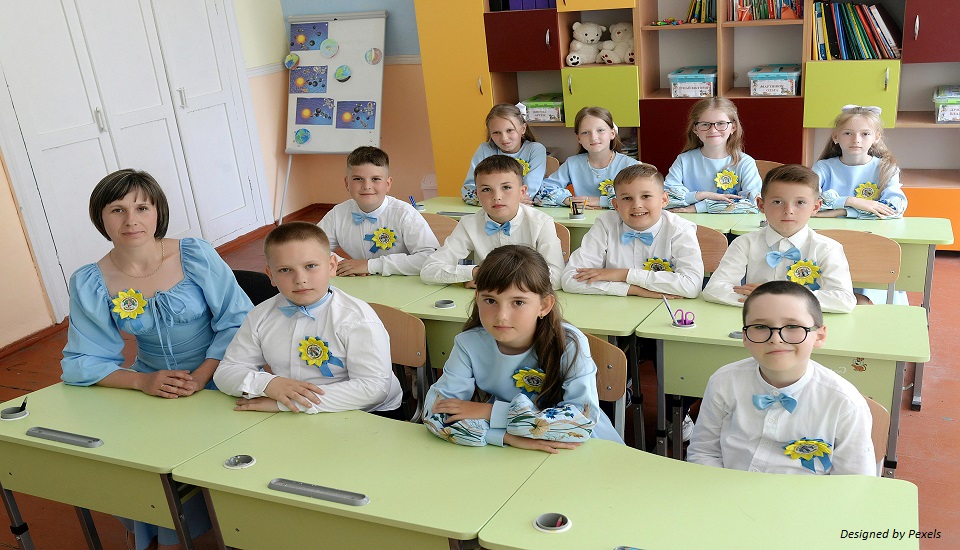
Teaching English in Uzbekistan The Silk Road Career Move You Haven't Considered
13th May 2026
What if the most rewarding teaching job of your life was in a country most people can't point to on a map?
Uzbekistan doesn't appear on the typical "teach English abroad" shortlist. Thailand gets the brochures. South Korea gets the salary comparisons. Japan gets the cultural mystique. But Uzbekistan?
It sits quietly in Central Asia - Ancient, Fascinating, and increasingly desperate for qualified English teachers.
And that's precisely why it's worth your attention.
If you hold an International Certificate in TEFL and you're looking for a destination that combines genuine demand, cultural depth, and career growth, then Uzbekistan deserves a serious look.
Here's what teaching English there actually looks like, on the ground.
Why Uzbekistan Is Suddenly on the Map for English Teachers
This isn't a trend born from tourism or expat lifestyle blogs. It's driven by policy and the scale is hard to ignore.
Over 6.78 million students are currently enrolled in general secondary education in Uzbekistan, the vast majority now studying English as a compulsory subject. That's a system-wide demand for qualified English teachers that the country simply cannot fill from its own graduate pool.
The response has been significant:
- Private language centres are scaling rapidly across major cities
- Universities are expanding their English programmes simultaneously
- The government has begun actively recruiting native-speaker teachers from abroad, with plans to grow that number year on year
- International schools in Tashkent are competing for credentialed candidates
This is not a country dabbling in English education. It is a country that has staked its national development strategy on it and is actively looking outward to fill the gap.
For qualified English teachers, that's not background noise.
That's a job market.
What Uzbek Classrooms Are Actually Like
Let's get past the romanticised version and talk about what you'll actually experience.
1. The Learners Are Genuinely Motivated
Uzbek students understand that English proficiency is a direct pathway to better universities, better jobs, and international opportunities. That motivation is not manufactured by schools or parents. It's cultural and economic. Students who want to learn have a fundamentally different teaching experience from students who are simply required to be in the room.
2. Classes Can Be Large
State schools often have 30–40 students per class. Private language centres run smaller groups, typically 10–20. If you're coming from a Western teaching background, the class sizes in public schools will require adjustment. Strong classroom management skills are non-negotiable.
3. Grammar-Translation is Still Dominant.
Many Uzbek English teachers were trained in a heavily grammar-focused, translation-based methodology. Students may be able to parse a sentence accurately but struggle significantly with spoken fluency. As a communicative English teacher, you'll often be filling the gap between textbook knowledge and actual spoken confidence, which is challenging, but also deeply rewarding.
4. Russian is the Second Language, Not a Foreign One
Uzbekistan is post-Soviet, and Russian remains widely spoken, particularly in urban centres like Tashkent and Samarkand. Don't assume everyone speaks Uzbek at home. Your students may be navigating Uzbek, Russian, and English simultaneously, which has real implications for how you approach vocabulary building and language interference.
5. Respect For Teachers Runs Deep
Teaching carries genuine social status in Uzbekistan. You will be treated with a level of respect that many Western teachers are simply not accustomed to. Students stand when a teacher enters the room. Parents are engaged. School leaders value their international staff. This cultural dynamic makes for a professional environment that is, in many ways, more affirming than what you may have experienced elsewhere.
English Teaching Jobs in Uzbekistan Opportunities & Salaries
English Teaching Jobs in Uzbekistan: Where Are They and What Do They Pay?
The job market is broader and more varied than most people realise. English teaching jobs in Uzbekistan exist across multiple sectors, each with its own culture, class profile, and pay structure.
Public Schools
The largest employer of English teachers. Positions are available nationwide. Salaries are modest, typically in the range of $410–$660 per month (approx.), but the cost of living is very low, particularly outside the capital. Job security is high, and schedules are consistent.
- Private Schools
Smaller class sizes, more structured environments, and students from more resourced families. Salaries range from roughly $490–$820 per month (approx.), and many private schools add housing allowances, paid leave, and performance bonuses, making the overall package more competitive than the base salary suggests.
- Private Language Centres
Booming across Tashkent, Samarkand, and other major cities. These centres attract both school-age students and adult professionals, many of whom are highly motivated learners preparing for international study or career moves. Pay ranges from approximately $370–$570 per month (approx.), but flexible hours and the option to supplement with private tutoring make these roles financially viable.
- International Schools
The most competitive roles and the best compensated, with salaries ranging from $980–$1,640 per month (approx.), often with housing, health insurance, and flights included. These schools follow Western curricula (IB, Cambridge, US/UK frameworks) and have high expectations. A recognised qualification and solid classroom experience are typically required.
- Universities
Prestigious, often flexible in terms of on-campus hours, and increasingly seeking qualified English teachers for language departments and ESP (English for Specific Purposes) programmes. Salaries are broadly in line with private schools, with some institutions offering additional perks.
- Private Tutoring
A popular income supplement and sometimes a primary role. Hourly rates run from approximately $6.50–$12.30 (approx.). Demand is strong from students preparing for international exams and working professionals looking to build business English skills. It takes time to build a client base, but the flexibility is real.
The Best Cities to Teach English in Uzbekistan
Where you teach shapes your entire experience. Each city offers something different:
1. Tashkent
The capital and the obvious starting point. Modern infrastructure, the widest range of job types, international schools, universities, and a thriving language centre sector. If you want options and convenience, Tashkent delivers. It's also the most cosmopolitan, easier to settle into for first-time expats.
2. Samarkand
One of the great cities of the ancient world and a genuinely extraordinary place to live. The pace is slower, the history is everywhere, and demand for English teachers is growing alongside tourism. A strong choice for teachers who want cultural immersion alongside a meaningful role.
3. Bukhara
Another Silk Road gem, with a more intimate, traditional character. Teaching here puts you at the heart of a community rather than a city. Students are eager, the environment is unique, and the sense of contribution is tangible.
4. Khiva
Small, UNESCO-listed, and deeply historic. Not the largest job market, but the experience of living inside a walled ancient city while teaching English to students who have rarely met a foreigner is unlike anything else.
5. Fergana, Andijan, Navoi
Growing cities with developing educational sectors and strong local demand. Less expat infrastructure, but a deeper engagement with Uzbek life and often a more profound sense of impact.
How to Prepare: What Uzbekistan's Classrooms Require of You
Teaching in Uzbekistan isn't a gap year adventure with a basic certificate. The classrooms are real, the need is real, and the students deserve properly trained teachers.
Here's what effective preparation looks like:
- Communicative Language Teaching (CLT) fluency
You need to be able to design and deliver lessons built around authentic communication, not just grammar drills. This is the methodology Uzbekistan's education system is actively moving towards, and your ability to model it matters.
- Classroom management for large groups
Thirty-five teenagers who are motivated but under-practised in speaking English is a specific challenge. Techniques for managing participation, controlling noise levels, and keeping learners engaged in large classes are essential.
- Understanding of language acquisition
Why do Uzbek learners make specific errors? What's the role of L1 (first language) interference? How do you sequence vocabulary instruction for learners navigating multiple languages? These aren't theoretical questions, they come up in every lesson.
- Cultural sensitivity in instruction
Topics, examples, and discussion prompts that work in a Western classroom may not land the same way, or may be inappropriate in Uzbekistan. Teachers who understand how to contextualise their instruction culturally are far more effective.
Completing a TEFL Certificate Course Online that covers these areas, communicative methodology, lesson planning, language acquisition theory, and classroom management, is the most direct way to build this preparation systematically.
What Living in Uzbekistan Is Actually Like
Beyond the classroom, Uzbekistan is genuinely extraordinary.
- Cost of living:
Remarkably affordable. A comfortable one-bedroom apartment outside the city centre runs around $375 per month. A meal at a local restaurant costs around $4–5. Monthly utilities average under $50. The Internet is fast and cheap. For teachers earning even a modest salary, purchasing power is strong.
- Food:
Exceptional and underrated globally. Plov, shashlik, Manti, Lagman noodles, freshly baked non-bread, and fruit markets that put most Western supermarkets to shame. Food is a genuine daily pleasure.
- Travel:
Samarkand, Bukhara, and Khiva are UNESCO World Heritage cities, all accessible by train. Kazakhstan, Kyrgyzstan, and Tajikistan are within reach for weekend or holiday trips. Central Asia as a travel region remains one of the world's most underexplored, and Uzbekistan sits at its centre.
- People:
Uzbek hospitality is not a cliché. Being invited to a family gathering, offered tea in someone's home, or welcomed into a local celebration is a regular experience for foreign teachers, not an occasional one.
How to Find English Teaching Jobs in Uzbekistan
Once your qualification is in place, the job search itself is more straightforward than most teachers expect:
- Specialist job platforms that list TEFL and international teaching roles are the most efficient starting point. Search specifically for Uzbekistan-based positions
- Contact language schools directly, particularly in Tashkent, Samarkand, and Bukhara. Many don't advertise openly but hire through direct outreach
- Facebook groups and LinkedIn groups dedicated to teaching in Central Asia are active and useful for connecting with current teachers and recruiters
- Prepare a strong application, highlight your TEFL qualification, any classroom experience, and specifically why you want to teach in Uzbekistan. Schools notice candidates who have done their research
- Consider private tutoring as a bridge, it builds local connections, generates immediate income, and often leads to institutional roles
The academic year runs from September to June. Most hiring happens between April and July for September starts, though language centres recruit year-round.
The Bottom Line
Uzbekistan is not an easy choice. It's not the obvious one, the Instagram-friendly one, or the one your friends will immediately understand.
But for teachers who want a destination where English instruction genuinely matters, where your presence in a classroom has real, measurable impact on a student's life chances, it belongs at the top of the list.
If you're ready to teach English abroad in Uzbekistan, start with honest preparation by pursuing a course like the International Certificate in TEFL. Understand the classrooms. Understand the culture. And make sure your training is strong enough to back up the passport stamp.
The Silk Road has been connecting the world for centuries. It might just connect you to your most meaningful teaching experience yet.
Frequently Asked Questions (FAQs)
1. What are the job opportunities for English teachers in Uzbekistan?
Uzbekistan offers various job opportunities across public schools, private language centres, international schools, and online teaching platforms.
2. How much do English teachers earn in Uzbekistan?
Salaries range from $410 to $1,640 per month (approx.), depending on the type of institution, with private language centres and international schools offering the highest pay and benefits.
3. What qualifications do I need to teach English in Uzbekistan?
You’ll need a TEFL certification at a minimum, and some institutions may prefer additional qualifications, such as a degree or previous teaching experience.
4. How is life in Uzbekistan for English teachers?
The cost of living is very low, and you’ll enjoy high-quality food, rich culture, and friendly hospitality. Many teachers report having a fulfilling experience living and working in Uzbekistan.
5. Is it difficult to get a teaching job in Uzbekistan?
No, the job market is growing rapidly due to the country’s focus on English education. Many schools and institutions recruit internationally, particularly in major cities like Tashkent, Samarkand, and Bukhara.
6. How can I find English teaching jobs in Uzbekistan?
Look for job listings on specialised platforms, reach out to language schools, or explore Facebook and LinkedIn groups dedicated to teaching in Central Asia.
7. Can I teach English in Uzbekistan without a degree?
Yes, while a degree is preferred by some institutions, many schools will hire teachers with a TEFL certificate and teaching experience.
8. What’s the best way to prepare for teaching in Uzbekistan?
Gain a strong TEFL certification, familiarize yourself with Uzbek classroom dynamics, and consider learning a few basic phrases in Russian or Uzbek to help ease communication.
Written By : Victoria Lewis

