
Diagnosed, Dismissed, or Misunderstood? The Course That Changes How You See Every Student
5th May 2026
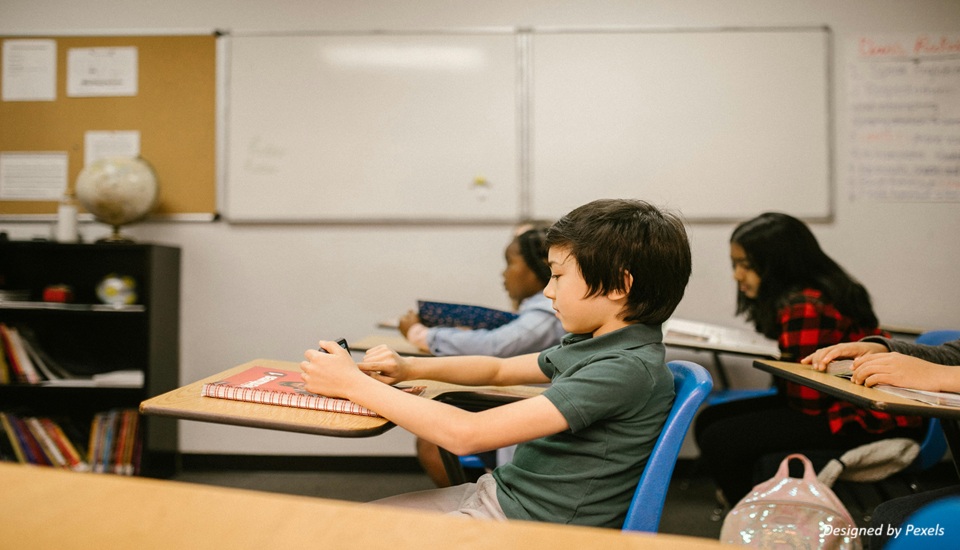
There is a child in almost every classroom who doesn't quite fit the mould.
Not disruptive. Not lazy. Not "behind." Just — different. And somewhere between the lesson plan, the thirty other students, and the bell going off — that child gets missed.
Now here's the harder question: what happens when the teacher genuinely wants to help, but simply doesn't have the tools?
That gap between good intentions and actual training is exactly what a B.Ed. in Special Educational Needs is built to close.
And it's a gap that matters more than most people in education are willing to admit.
The Problem With How Most Teachers Are Trained to See "Struggling" Students
Traditional teacher training focuses on the majority. It prepares educators for students who absorb content in conventional ways, respond to standard instruction, and move through the curriculum at a predictable pace.
Students who don't fit that pattern? They get referred. Labelled. Moved to the back of the mental queue.
But here's what those labels often obscure:
- A child with ADHD isn't failing to pay attention, their brain processes attention differently
- A student on the autism spectrum isn't being difficult, they're navigating a world of communication that wasn't designed for them
- A child with dyslexia isn't bad at reading, they process written language through a different neurological route
- A student with Auditory Processing Disorder can hear perfectly, they just struggle to make sense of what they hear
- A child with Visual Perceptual Deficits isn't careless, they interpret visual information differently from their peers
Each of these students is capable. Each of them can learn. What they need is a teacher who understands how, and that understanding does not come from instinct alone. It comes from training.
What "Inclusive Education" Actually Demands of a Teacher
The word "inclusive" is everywhere in modern education. School policies use it. Curricula reference it. Governments mandate it.
But real inclusion, the kind that actually changes outcomes for students with special needs, is not achieved by simply placing them in a mainstream classroom and hoping for the best.
It requires a teacher who can:
- Identify early signs of learning differences before they harden into labelled barriers
- Adapt instruction without reducing expectations, differentiating the how while maintaining the what
- Design and deliver Specially Designed Instruction (SDI) tailored to individual learning profiles
- Write and implement Individualized Education Programs (IEPs) — the structured, goal-oriented documents that map out what a student needs and how progress will be measured
- Collaborate with parents, therapists, school counsellors, and support staff as part of a coordinated care approach
- Respond in real time: Adjusting, observing, and adapting as a student's needs evolve
This is specialised knowledge. A weekend workshop will not build it. A short certificate will not sustain it. It requires structured, formal training at a depth that genuinely prepares you for the complexity of an inclusive classroom.
Why a Degree-Level Qualification Changes What You Can Do
There is a meaningful difference between knowing about special educational needs and being qualified to teach students who have them.
A degree-level program in SEN goes deeper than any short course in several important ways:
- Theoretical depth
Understanding the neuroscience and psychology behind conditions like ADHD, Down Syndrome, and autism gives teachers a framework, not just a checklist. It means you can respond to a student you've never encountered before, not just the ones your training explicitly covered.
- Specialist content that actually reflects classroom reality
The best SEN programs cover conditions in detail, including less commonly discussed ones like Auditory Processing Disorder and Visual Motor Deficits, because real classrooms contain students whose needs don't always come with a clear diagnosis.
- Structured teaching practice
Not observation from the back of the room, but documented, evidence-based classroom engagement. Real hours. Real students. Real feedback. This is where theory becomes competence.
- Action research
The most rigorous programs ask you to investigate an actual challenge in inclusive education, apply evidence-based strategies, reflect critically, and draw conclusions. This develops the kind of professional judgement that no textbook can fully teach.
- Career eligibility
Many senior SEN roles like- SENCo positions, inclusion coordinators, specialist advisory roles, require degree-level credentials. A certificate course, however good, often hits a ceiling in terms of what doors it opens.
What You Will Actually Learn to Do
A well-structured B.Ed. in Special Educational Needs should leave you capable of:
- Recognising and understanding the profiles of conditions including ADHD, autism, Down Syndrome, specific learning disabilities, APD, and visual processing differences
- Designing lessons that genuinely accommodate diverse learners — not just modifying for the sake of compliance
- Writing IEPs that are meaningful, measurable, and actually used
- Applying assessment strategies that reveal what a student can do, not just where they fall short
- Supporting the emotional and social development of students with SEN alongside their academic progress
- Working confidently in inclusive classrooms across different school systems and cultural contexts
That last point matters. As schools globally move toward inclusion as standard, not exception, the teacher who can do all of the above is not a specialist sidelined in a support room. They are central to how good schools function.
Who Is This Degree For?
More people than you might think.
- Classroom teachers who regularly encounter students with learning differences and feel underprepared
- Teaching assistants and shadow teachers who want to formalise the expertise they are already building on the job
- Career changers from any academic background who are drawn to inclusive education as a vocation
- International school educators who work in environments where SEN provision is a mandatory requirement
- Graduates in non-education fields, because most programs accept applicants from any degree discipline, and some recognise prior learning and life experience as partial credit
The entry requirements for a Bachelor's degree in Special education online, are deliberately accessible, typically a high school certificate or a bachelor's in any field, basic English proficiency, and digital literacy. The barrier to entry is low. The depth of what you gain is not.
What to Look for in an Accredited SEN Degree Program
Because special education intersects with both education and child welfare, the credibility of your qualification matters significantly, to employers, to school leadership, and to the families of the students you will work with.
When evaluating any program, check for:
- ASIC Premier Status: Recognised by UKVI and a full member of INQAAHE; signals genuine international standing
- QAHE and EQAC accreditation: Quality assurance bodies recognised across the UK, EU, and globally
- NASET alignment: The National Association of Special Education Teachers sets professional benchmarks that credible SEN programs reflect
- University degree conferral: The qualification should be awarded by a recognised university, not just a training provider
- CPD Certification: Valuable for continuing professional recognition, particularly in UK and international school markets
- Ofqual-regulated endorsement: Particularly relevant for educators targeting British curriculum schools globally
An online program that carries this level of accreditation is not a compromise on quality. For working adults, career changers, and internationally mobile educators, it is often the most practical and the most credible route available.
Where This Degree Can Take You
Completing an SEN degree opens career pathways both inside and outside the traditional classroom:
School-based roles:
- Inclusive classroom teacher
- Shadow teacher or learning support specialist
- SEN Coordinator (SENCo)
- Head of Inclusion or Special Needs Department
Advisory and consultancy roles:
- Education consultant specialising in learning differences
- IEP coordinator or curriculum developer for SEN settings
- Trainer of other educators in inclusive methodology
Beyond the school:
- Child development consultant
- Researcher in inclusive education
- Policy advisor or education NGO specialist
And for those who want to go further academically, an MA in Special Education, a postgraduate qualification in Educational Psychology, or a Doctorate in Education are all natural progressions from this foundation.
The Bottom Line
Some students are not difficult. They are not slow. They are not problems to be managed.
They are learners whose needs have not yet met a teacher who understands them.
Pursuing a B.Ed. in Special Educational Needs is not about adding letters after your name. It is about changing the lens through which you see every student who walks into your classroom — and building the knowledge, the skills, and the professional credibility to actually do something with that perspective.
The students who need you most are already there. The question is whether you are equipped to reach them.
Frequently Asked Questions (FAQs)
1. What is a B.Ed. in Special Educational Needs?
It is a degree program that prepares educators to support students with diverse learning needs through specialised teaching strategies and inclusive practices.
2. Who should pursue a bachelor's degree in special education online?
Teachers, teaching assistants, career changers, and professionals interested in inclusive education can benefit from this flexible program.
3. Why is specialised SEN training important for teachers?
It helps teachers understand different learning profiles, design effective interventions, and create inclusive classroom environments.
4. What skills do you gain from an SEN degree?
You learn to identify learning differences, design IEPs, adapt teaching strategies, and support both academic and emotional development of students.
5. What career opportunities are available after an SEN degree?
Roles include inclusive classroom teacher, SEN coordinator, learning support specialist, education consultant, and curriculum developer.
6. Can an online SEN degree be globally recognised?
Yes, if the program is accredited by recognised bodies, it holds value across international schools and education systems.
Written By : Park Jin Ae

