
The English Alphabet Has 26 Letters, So Why Are There Around 44 Sounds?
25th November 2026
Imagine asking a child to read the word ship.
The child sees four letters but hears only three sounds. Now ask them to read chat. Again, four letters make three sounds.
This can seem strange to a new learner. After all, if English has 26 letters, why does it need so many sounds?
The answer lies in the difference between letters and speech sounds.
Letters are symbols we write. Sounds are what we hear and say. One letter can make more than one sound, while two letters can work together to make a single sound.
Once teachers understand this, they can help children make sense of English spelling and pronunciation.
Why Does English Have More Sounds Than Letters?
The English alphabet has 26 letters. However, a widely used model of British English describes around 44 distinct speech sounds, also called phonemes.
The exact number can change with the accent and the way sounds are grouped.
Sometimes, two letters make one sound. The letters SH in ship make a single sound, as do CH in chair.
English spelling also reflects the language's history. Many words came from other languages, and their spellings have changed less than their spoken forms.
This is why teachers cannot always rely on spelling alone to explain how a word sounds.
What Is the Difference Between Phonics and Phonetics?
Phonics and phonetics are closely linked, but they are not the same. Phonics teaches learners how written letters and letter groups connect with sounds. It helps children read unfamiliar words and improve their spelling.
Phonetics focuses on how speech sounds are made, heard, and described. It helps teachers understand how the lips, tongue, teeth, and voice work together when we speak. Both areas are useful. Phonics supports reading and spelling, while phonetics helps explain speech sounds and pronunciation.
5 Reasons Why English Sounds Confuse Learners
English can be difficult because spelling and speech do not always follow one simple pattern.
Here are five common reasons learners struggle.
1. One Letter Can Make Different Sounds
The same letter can sound different in different words. For example, the letter G sounds different in goat and giant. Children who learn only one sound for each letter may find these words confusing.
Teachers can help by showing word groups and explaining common spelling patterns.
2. Two Letters Can Make One Sound
Some letters work together to make a single sound. These are often called digraphs. Examples include SH in shop, CH in chair, and TH in think.
Students may try to say each letter on its own. Teachers can guide them to hear and say the combined sound.
3. Some Letters Are Silent
Why do we write the K in knee when we do not say it? Silent letters can make reading and spelling harder.
Other examples include the B in lamb and the W in write. Teachers can introduce these words in small groups so learners begin to notice common patterns.
4. Vowel Sounds Can Be Tricky
English has five main vowel letters: A, E, I, O, and U. However, these letters can represent many different vowel sounds.
Think about sit, site, and seat. The vowel sounds are different, even though the words look similar. Listening games and word comparisons can help students hear these differences.
5. Accents Can Change Pronunciation
English is spoken in many parts of the world. A word may sound different in British, American, Australian, or Indian English.
For example, the R in car is usually pronounced in American English but is often not pronounced in standard southern British English.
Teachers should help students understand these differences without treating every accent as a mistake.
How Can Teachers Explain the 44 Sounds in Simple Ways?
Children do not need to learn all 44 sounds in one lesson. A better approach is to introduce sounds in small groups and give students time to practise.
Teachers can use these activities:
- Sound sorting: Ask children to group words that share the same sound.
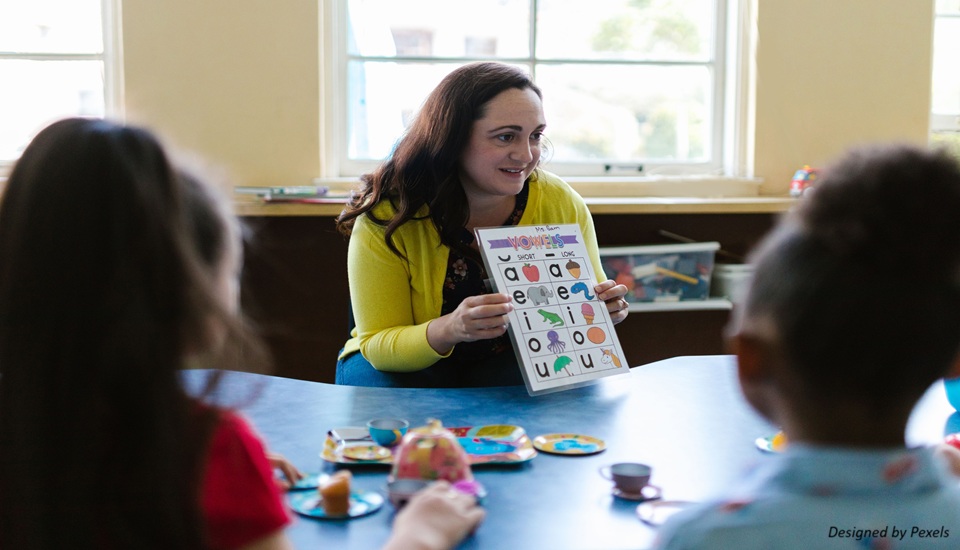
- Picture cards: Use pictures to help learners connect words with sounds.
- Sound blending: Say the sounds in cat separately and ask students to blend them into a word.
- Sound swapping: Change the first sound in mat to make sat.
- Listening games: Ask learners whether two words begin or end with the same sound.
These activities can make lessons more active and enjoyable.
Teachers should also give clear examples and allow children to repeat sounds without fear of making mistakes. The aim is to build sound awareness before moving to harder reading and spelling tasks.
Why Is Pronunciation Training Important for English Teachers?
A teacher may speak English well but still find it hard to explain why certain words sound different. For example, students may ask why food and good have different vowel sounds, even though both contain OO.
A teacher who understands English sound patterns can answer such questions more clearly. An online English pronunciation course can help teachers study vowel sounds, consonant sounds, word stress, and connected speech.
This knowledge can also help teachers identify why students struggle with certain words. For instance, a learner may find it difficult to hear the difference between ship and sheep.
Instead of simply asking the child to repeat the words, a teacher can use listening tasks and sound comparisons. Good pronunciation teaching is not about making every student sound the same. It is about helping learners speak clearly and understand others.
How Can Professional Training Improve Phonics Lessons?
Teaching phonics involves more than asking children to repeat letter sounds. Teachers need to know how to introduce sounds, check understanding, and support students who find reading difficult.
A phonics certificate course for teachers can help educators explore sound-letter links, blending, segmenting, and early reading activities. For example, a teacher may notice that a student can name every letter but struggles to read a simple word.
The child may need more practice blending sounds rather than memorising letters. Training can help teachers recognise this difference and choose a suitable activity.
An online English phonetics course can also help educators understand how sounds are produced and why some learners find them difficult. When teachers combine sound knowledge with clear teaching methods, they can make lessons easier to follow.
What Should Teachers Look for in a Phonics or Pronunciation Course?
Not every course focuses on the same skills. Some courses mainly teach early reading methods. Others focus on speech sounds, pronunciation, or accent awareness.
Before choosing a course, teachers should check whether it covers:
- English consonant and vowel sounds
- Letter-sound relationships
- Blending and segmenting activities
- Common pronunciation problems
- Word stress and speaking practice
- Practical teaching methods for different age groups
Teachers should also look at the course format, learning tasks, and support offered. A useful course should help educators apply what they learn in real lessons, not simply remember terms.
Bottom Line
English may have only 26 letters, but its sound system is far more varied. The difference between letters and sounds explains many common reading, spelling, and pronunciation problems.
When teachers understand these patterns, they can help students approach unfamiliar words with greater confidence. An online English pronunciation course can support teachers who want to improve their knowledge of speech sounds and classroom teaching methods.
The goal is not to make English spelling seem perfectly simple. It is to help learners understand its patterns, recognise its exceptions, and become more confident readers and speakers.
Frequently Asked Questions (FAQs)
1. Does every English accent have exactly 44 sounds?
No. The number of speech sounds varies across accents. The figure of 44 is a common teaching model, not a fixed number for every form of English.
2. What is a phoneme in English?
A phoneme is a speech sound that can change the meaning of a word. For example, changing the first sound in pat to the first sound in bat changes the word.
3. At what age should children start learning phonics?
Children often begin early phonics activities during preschool or the first years of school. Lessons should match their age, language skills, and learning needs.
4. Can phonetics help teachers who teach older students?
Yes. Phonetics can help teachers explain difficult sounds, word stress, and pronunciation patterns to learners of different ages.
5. Can teachers learn phonics and pronunciation skills online?
Yes. Online courses can help teachers study sound patterns and teaching methods. Courses with listening tasks, guided practice, and feedback may offer more useful learning experiences.
Written By : Laura Taylor

